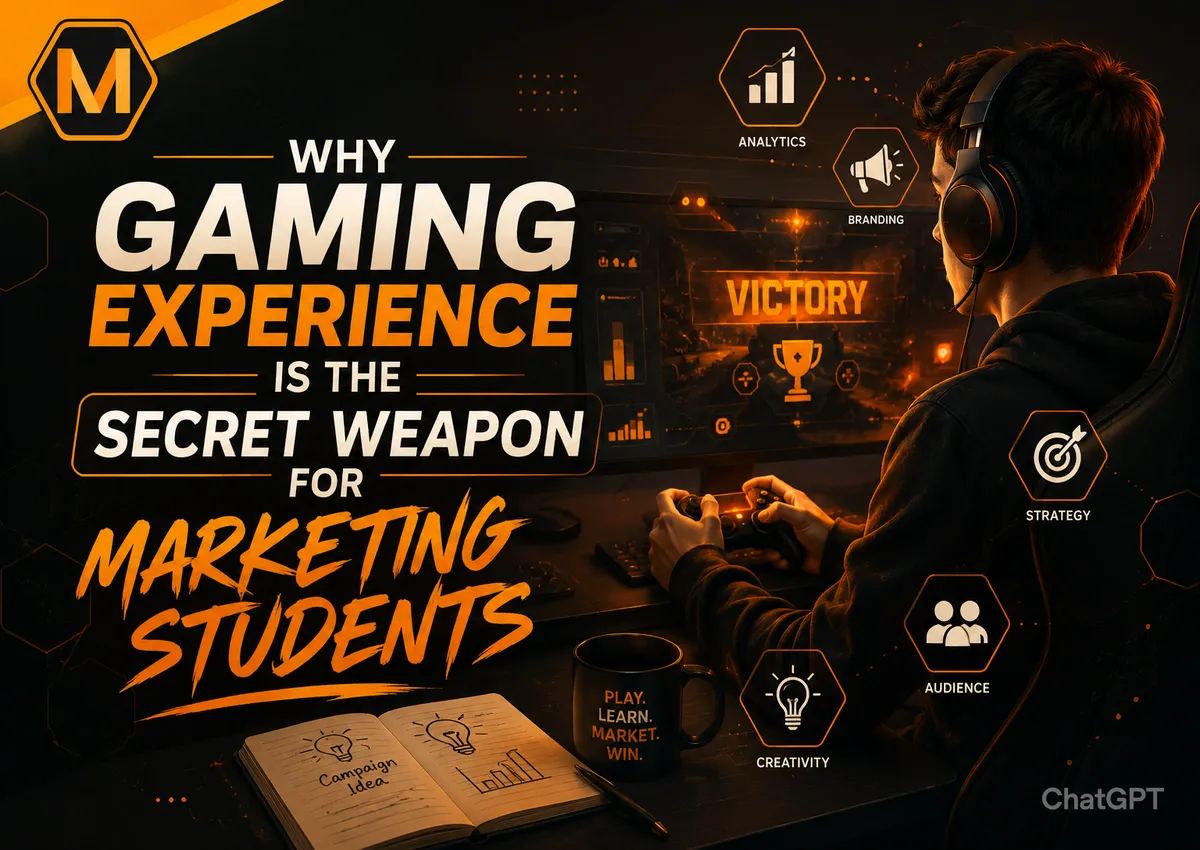

For decades, the stereotype of a gamer was someone locked away in a dark room, detached from reality. However, as the digital economy evolves, the narrative is shifting. Modern marketing is no longer just about flashy billboards or catchy jingles; it is about engagement, community, and data-driven psychology. Interestingly, these are the exact pillars that hold up the multi-billion-dollar gaming industry. For undergraduate students pursuing a degree in business or communications, hours spent in virtual worlds aren’t just leisure; they are a masterclass in consumer behavior.
Understanding how a player transitions from a casual user to a loyal fan is the ultimate goal for any brand. In the academic sphere, analyzing these patterns requires a deep dive into complex theories of digital interaction. Many students find that balancing these high-level concepts with tight deadlines is a challenge, which is why seeking professional marketing assignment help has become a standard strategy for those aiming to integrate gaming logic into their MyAssignmentHelp scholarly projects. By viewing academic work through the lens of a “quest,” students can apply the same persistence they use to beat a difficult boss to their research and writing.
The Psychology of the “Game Loop” and Consumer Retention
At the heart of every successful game is the “core loop”: Action, Feedback, and Reward. A player performs a task, receives an immediate response (like points or a level-up), and feels a sense of accomplishment that drives them to repeat the action. This is the holy grail of marketing. Brands strive to create a similar loop with their customers through loyalty programs and interactive social media campaigns.
Marketing students who game have a head start in understanding “dopamine-driven design”. They instinctively know why a notification works or why a specific user interface layout feels rewarding. In the classroom, this translates to a better grasp of consumer psychology. When you understand why you’re willing to grind for 40 hours for a digital sword, you understand the fundamental principles of brand value and perceived benefit.
Interactive Storytelling: Beyond Traditional Advertising
Traditional marketing often feels like a one-way conversation where a brand talks and the consumer listens. In contrast, gaming is inherently interactive. The story changes based on the player’s choices. This “branching narrative” is now becoming the gold standard for digital marketing campaigns, especially on platforms like TikTok and Instagram, where user participation is key.
Students who have experienced deep, narrative-driven games understand how to build a brand voice that resonates. They know that today’s audience doesn’t want to be sold to; they want to be part of the story. This shift from “interruption marketing” to “permission marketing” is a core component of modern curricula. By drawing parallels between RPG (Role-Playing Game) mechanics and customer journey mapping, students can create marketing plans that feel personal and immersive.
The Skillset Synergy Table
| Gaming Skill | Marketing Application | Academic Value |
| Resource Management | Budgeting & Media Buying | Strategic Planning |
| Guild Leadership | Team Management & PR | Group Project Coordination |
| Meta-Gaming (Analysis) | SEO & Market Trends | Data Synthesis |
| Rapid Adaptation | Crisis Management | Exam Resilience |
Data Literacy and the “Meta”
In the gaming world, the “Meta” (Most Effective Tactics Available) refers to the strategies that are currently winning. To stay competitive, players must analyze vast amounts of data, from weapon stats to frame data. This is essentially high-level data analytics. For a marketing student, being able to identify the “Meta” of a social media platform, which hashtags are trending, and what time of day engagement peaks is vital for success.
Gamers are naturally comfortable with dashboards, statistics, and performance metrics. When tasked with an assignment on Google Analytics or SEO performance, a gamer doesn’t see a boring spreadsheet; they see a leaderboard. This mindset makes the technical side of marketing much less intimidating. It encourages a culture of optimization, where the goal is always to improve the conversion rate through iterative testing. The standard mathematical approach to tracking this success relies on a simple performance ratio:
Building Communities in Virtual and Real Spaces
One of the most significant shifts in the industry is the move toward community-led growth. Gaming excels at this. Whether it’s a Discord server for an indie title or a massive subreddit for a triple-A release, gaming communities are incredibly high-touch and loyal. Marketing students can learn more about community management from a weekend on Twitch than from a decade-old textbook.
Understanding the “Tribalism” of gaming, the intense loyalty to a console or a franchise is key to understanding brand advocacy. Students can leverage this knowledge to write compelling essays on “Brand Cultism” and “Influencer Marketing”. This is where the practical application of theory meets real-world experience. For those looking to excel in their studies, utilizing resources at MyAssignmentHelp can provide the structural support needed to turn these observations into high-scoring academic papers.
The Future of Gamification in Education and Business
As we look toward the future, “gamification” is being integrated into everything from fitness apps to banking. Companies are actively looking for graduates who can make mundane tasks feel like a game. Marketing students with a gaming background are uniquely positioned to lead this change. They understand the balance between challenge and skill that keeps a user in a focused, productive state.
In a globalized market, the ability to communicate across cultures is another hidden benefit. Online gaming brings people together from every corner of the globe. This exposure fosters a global tone in writing and communication, an essential trait for anyone working in international marketing. Students learn to navigate different social norms and communication styles, making them more effective at crafting campaigns for diverse audiences.
Frequently Asked Questions (FAQ)
Q.1. How does gaming help with marketing assignments?
Gaming fosters analytical thinking, strategic planning, and an understanding of digital ecosystems. These skills make it easier to grasp marketing concepts like consumer behavior and data analytics.
Q.2. Can I mention gaming experience on my CV?
Absolutely, especially for roles in digital marketing, community management, or UX design. Focus on soft skills like leadership in multiplayer settings or data analysis in competitive play.
Q.3. Is gamification just a trend?
No, it is a proven psychological approach to increase engagement. Many top-tier brands use game mechanics to improve customer retention and employee productivity.
Q.4. Why is community management so important in marketing?
Communities provide organic growth and brand protection. Learning how gaming communities function provides a blueprint for building brand loyalty in any industry.